UX Prinzipien erklärt

Diese Übersichtsseiten erklären UX‑Prinzipien anschaulich und kompakt. Klare Grafiken, ausreichender Weißraum und einfache Beispiele unterstützen Lehrerinnen und Mitschüler beim Lernen.
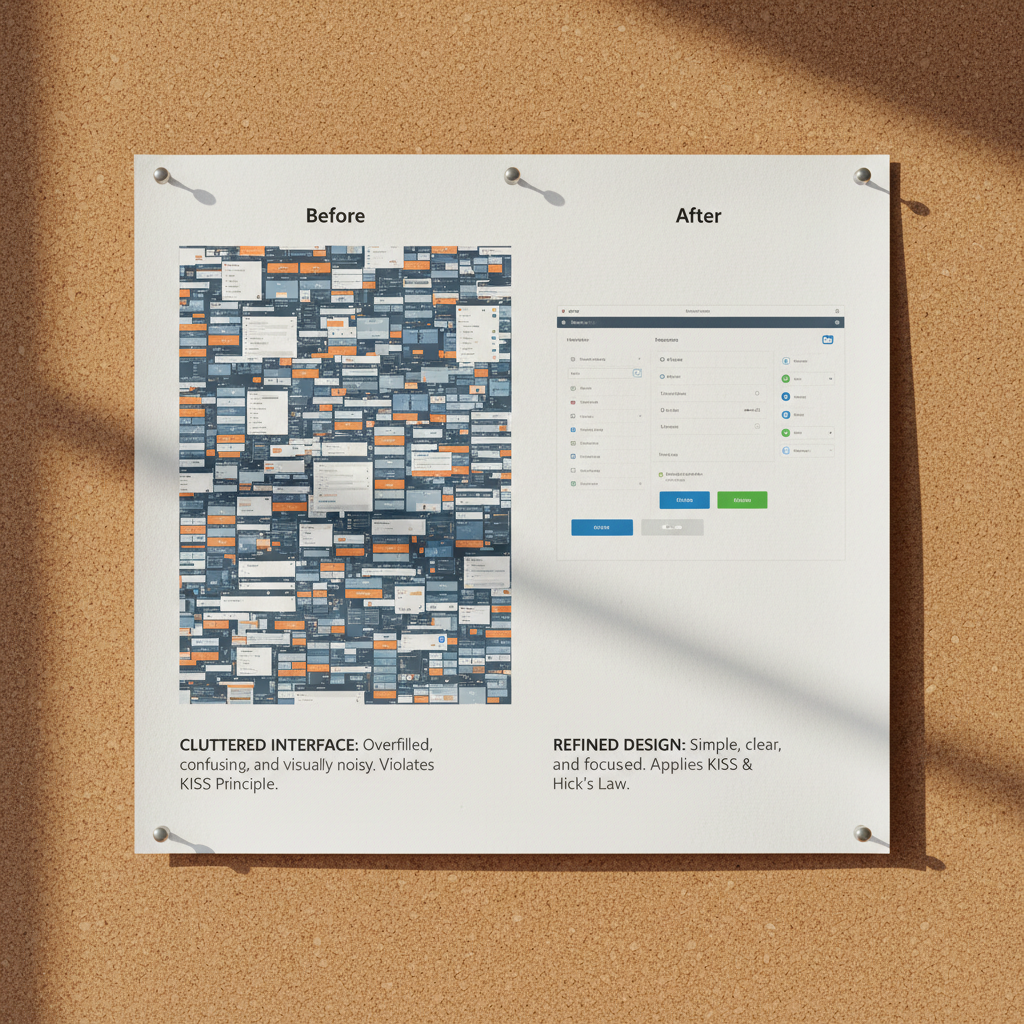
A side-by-side comparison poster pinned to a corkboard, photographed straight-on for clarity. On the left, a cluttered interface mockup overfilled with buttons and text; on the right, a refined version using KISS, generous white space, and reduced choices according to Hick’s Law. Each side is labeled with small, sharp typography: “Before” and “After,” plus brief captions beneath explaining each principle. Warm, natural light from a nearby window grazes the slightly textured cork, creating gentle shadows around the paper’s edges and thumbtacks. The color palette is muted with a few accent colors highlighting the improved design. The composition is symmetrical, sharp from edge to edge, with a professional, educational tone in photographic realism, ideal for demonstrating UX concepts visually.
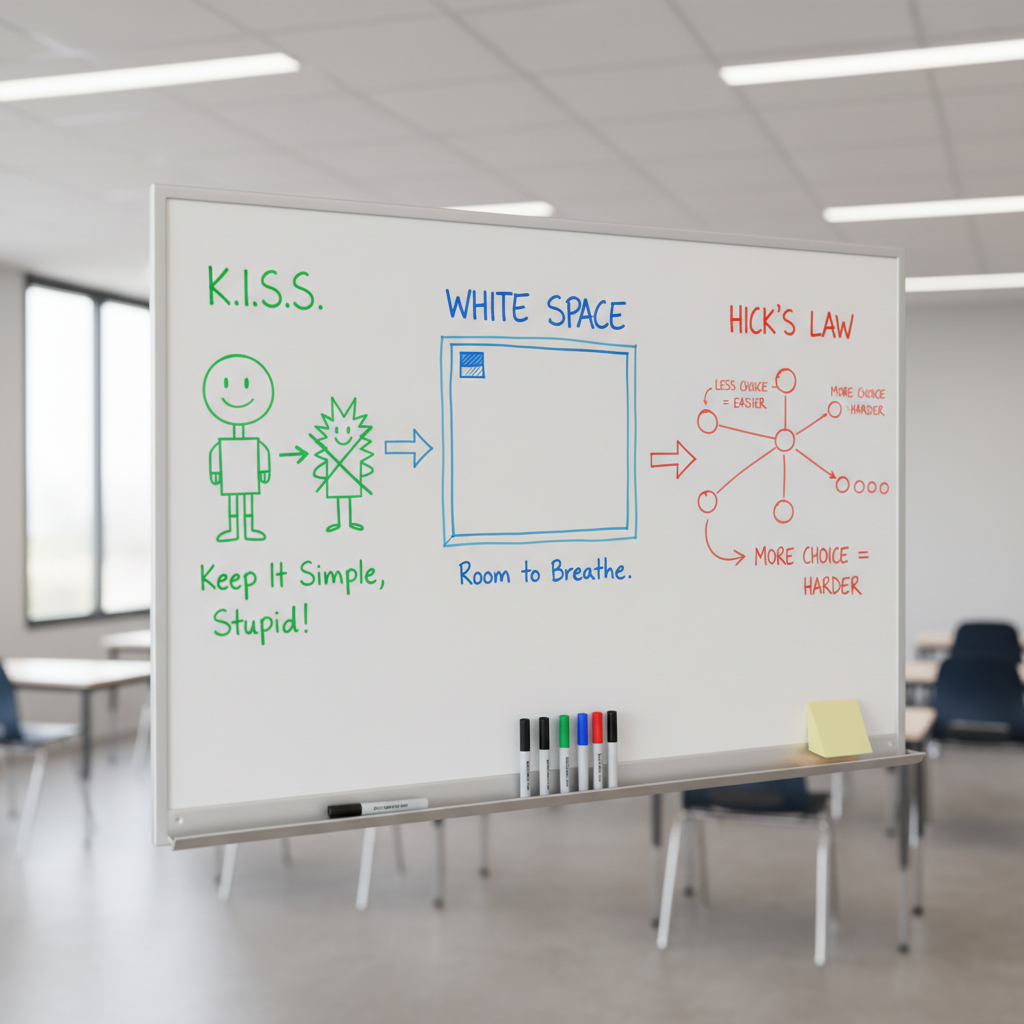
A large, wall-mounted whiteboard in a bright, modern classroom, captured from a slightly angled, eye-level perspective. On the whiteboard, three neatly drawn, color-coded diagrams explain KISS, white space, and Hick’s Law using simple shapes, arrows, and short handwritten labels. Magnetic markers rest in a metal tray beneath, and a stack of blank sticky notes sits on a nearby slim ledge. Soft overhead fluorescent lighting combined with indirect window light keeps the scene evenly lit without harsh glare, making the diagrams crisp and readable. The background shows only blurred hints of empty chairs and a clean floor, emphasizing the board as the main subject. The photographic realism and neutral color palette create a calm, instructional atmosphere suitable for teachers and classmates.

Case Studies kompakt

Jede Arbeit wird als kurzes Case Study präsentiert: Ausgangsproblem, angewendetes Prinzip, Ergebnis – eine wertvolle Ergänzung für jedes UX‑Portfolio.
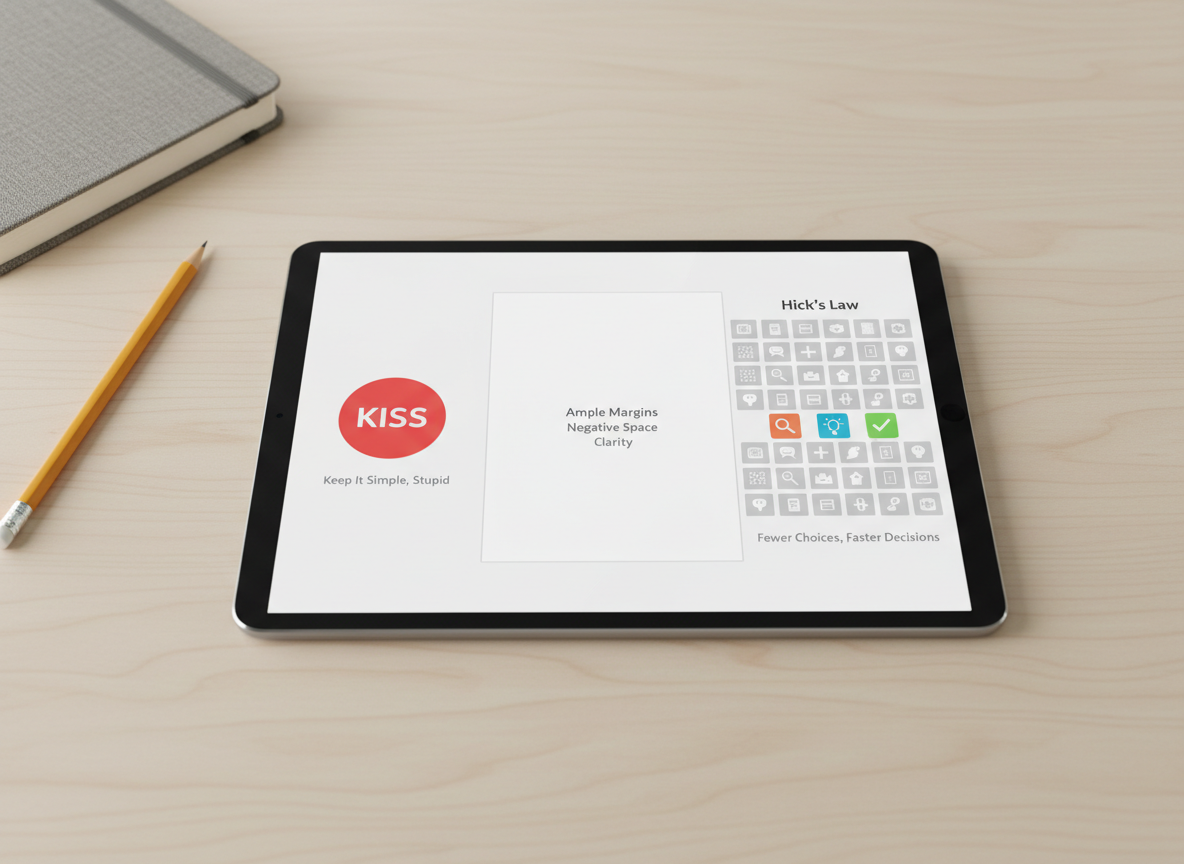
An overhead photographic view of a digital tablet lying on a pale birch wood table, its screen split into three clean sections. The first shows an ultra-simple app interface with one bold button titled “KISS,” the second is almost empty with large margins and sparse text visualizing white space, and the third presents a choice grid reduced from many faded icons to just a few clear, vivid ones for Hick’s Law. Soft studio lighting evenly illuminates the scene, minimizing harsh shadows and emphasizing the crisp, high-resolution UI details. A neutral, slightly blurred background with a single closed notebook and pencil keeps the atmosphere professional, calm, and analytical, perfect for explaining UX principles to students.

Rezensionen

A high-resolution laptop screen in close-up, photographed on a tidy, light gray desk, displaying a dark-mode interface that visually explains KISS, white space, and Hick’s Law in three adjacent cards. Each card contains a simple icon, concise headline, and minimal explanatory text. Around the laptop, only a slim wireless keyboard and a single plant in a simple concrete pot provide context, reinforcing minimalism. Cool, even daylight from an unseen window casts a soft glow, adding faint reflections on the laptop’s metallic body. The mood is focused and professional, with a balanced composition using the rule of thirds and shallow depth of field that keeps the interface sharp while the surroundings blur slightly, supporting an educational UX portfolio.

Aya Nakamura

„Diese Materialien helfen meinen Schülerinnen und Schülern, UX‑Prinzipien selbstständig zu erkennen und anzuwenden.“
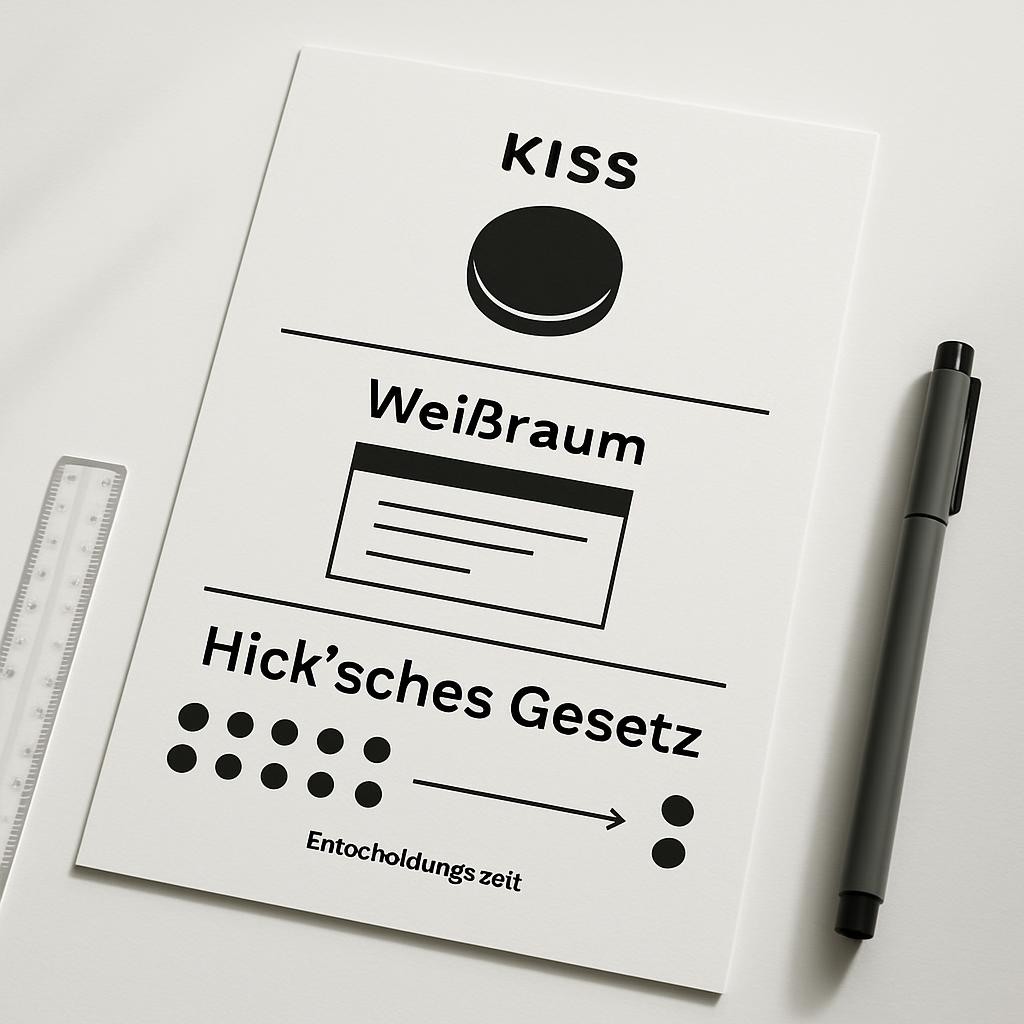
A minimal, high-contrast infographic print lying flat on a white tabletop, captured from a slightly elevated angle. The sheet is divided horizontally: the top half titled “KISS” with a simple icon of a single large button; the middle titled “Weißraum” showing a sparse layout with large margins and airy spacing; the bottom titled “Hick’sches Gesetz” depicting a timeline where many choice icons reduce to a few, labeled with decreasing decision time. Soft, diffused daylight from the left illuminates the smooth paper surface, giving subtle shadows on the right edge. A translucent ruler and a fine-liner pen rest nearby, hinting at precise design work. The photographic, clean, and modern aesthetic supports a clear, teacher-friendly explanation of UX principles.

Mateo García

„Der Unterricht fühlt sich klarer an, seit wir diese Bilder nutzen; die Prinzipien werden deutlich verständlich.“